


Our Work–Programs < AWIS < AWIS 2026
African Women in Science (AWIS)
2026 Program
Learn More About AWIS
The African Women in Science program is a transformative initiative for early-career African women scientists from the African Great Lakes region. The program aims to build capacity and offer mentorship opportunities for African women scientists who are actively engaged in African Great Lakes and freshwater research.
Participants will be a part of a 11-month cohort of African women scientists and become the next generation of African women scientists catalyzing positive change in the African Great Lakes.
The African Women in Science (AWIS) program is a joint program through the International Institute for Sustainable Development and the African Center for Aquatic Research and Education.
2026 Cohort
UGANDA – LAKE VICTORIA/ LAKE KYOGA/ LAKE ALBERT
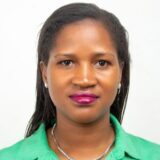
MARGRET NANYANZI BINTU
Fisheries Officer
Ministry of Agriculture, Animal Industry, and Fisheries
Entebbe, Uganda
Margret Nanyanzi Bintu is a Fisheries Inspector with the Ministry of Agriculture, Animal Industry and Fisheries in Uganda, where she supports quality assurance and conducts official controls to ensure safe and high-quality fisheries products for national, regional, and global markets. With six years of experience, she has contributed to policy review and formulation, including the recent review and validation of the Uganda Fish Act, the principal legislation governing fisheries governance and development in the country. Margret is actively involved in Lake Victoria fisheries resource management and conservation through the implementation of residue and water monitoring programs, while also supporting livelihoods and income-generation initiatives for fishing communities, with a focus on women and youth. She holds a BSc in Fisheries and Aquaculture from Makerere University and is pursuing an MSc in Zoology (Fisheries and Aquaculture). Margret has also completed several short courses to enhance her research and scientific writing skills, reflecting her commitment to advancing sustainable fisheries management.
MALAWI- LAKE ALBERTLAKE MALAWI/ NIASSA/NYASA

CAROLYN MUNTHALI CHINGUO
Chief Fisheries Officer
Department Of Fisheries
Malawi
Carolyn Chinguo Munthali is an aquaculture and fisheries scientist with a strong passion for fisheries policy and management. She holds a Master’s degree in Aquaculture from Lilongwe University of Agriculture and Natural Resources. Her work focuses on gender-responsive and climate-resilient approaches that empower women across fish value chains, strengthen inclusive decision-making in small-scale fisheries, and integrate data-driven insights into climate adaptation strategies. Carolyn’s research emphasizes women’s participation in fisheries governance and the development of actionable, gender-responsive frameworks for sustainable fisheries management. She is a Centre for African Leaders in Agriculture (CALA) Fellow, an AWARD GRASP Fellow, and an alumna of the UNESCO–GRO Fisheries Training Programme in Iceland and the Australia Awards Africa climate change adaptation programme. Carolyn has convened and contributed to high-level policy dialogues, including the validation of the National Fisheries and Aquaculture Policy, and continues to build expertise in Data Science and Business Analytics to strengthen research, policy, and practice for inclusive and sustainable development.
DEMOCRATIC REPUBLIC OF CONGO – LAKE KIVU

ESPERANCE MUSOMBWA KUBOTA
Researcher
Unité d’Enseignement et de Recherche en Hydrobiologie Appliquée-ISP/Bukavu (UERHA-ISP/Bukavu),
Bukavu, Democratic Republic of Congo
Espérance Musombwa Kubota is a researcher at URHRA-ISP/Bukavu, Democratic Republic of Congo, specialising in aquatic resource monitoring and inland fisheries management. She holds a Master’s degree in Aquatic Resource Monitoring and Inland Fisheries Management and focuses her research on fish diversity in previously unexplored rivers of eastern DRC. Espérance is compiling the first inventory of riverine fish species within the Nkuba Community Reserve, contributing critical baseline data for conservation and management. She also conducts taxonomic research on catfishes of the family Amphiliidae (genus Amphilius), with particular emphasis on Amphilius kivuensis, a species now recognised as a complex rather than a single widely distributed species. Through collaboration with the Royal Museum for Central Africa (RMCA), Belgium, she integrates morphometric and genetic analyses to describe new species and advance fish systematics in the Congo Basin. Her work aims to strengthen local research capacity and promote sustainable management of aquatic ecosystems in eastern DRC.
ZAMBIA- LAKE ITEZHI-TEZHI AND KABOMPO RIVER
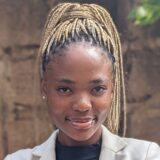
JOYCE MBEWE
Research Assistant
University of Reading C/O Palabana University
Lusaka, Zambia
Joyce Mbewe is a graduate from the Copperbelt University, holding a Bachelor of Science degree in Fisheries and Aquaculture. She currently works as a Research Assistant on an ecotoxicology project assessing heavy metal contamination in the Kabompo River and Lake Itezhi-Tezhi, two major aquatic systems in Zambia. Her role involves the collection of water, sediment, and fish samples, as well as laboratory analysis of selected organs to evaluate heavy metal concentrations and their implications for fish and human health. Joyce has a strong interest in climate change and its impacts on fisheries and aquaculture and previously contributed to a national research project examining the effects of climate change on aquaculture production in Zambia, where she played a key role in data collection, community engagement, and research coordination. The findings from this work have been published in a reputable scientific journal. Joyce aspires to further develop her expertise in aquatic sciences and to contribute to sustainable, climate-smart fisheries and aquaculture development that supports vulnerable communities.
TANZANIA- LAKE TANGANYIKA
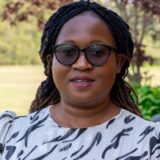
HAPPINESS ANOLD MOSHI
Lecturer and Researcher
University of Dar es Salaam- School of Aquatic Sciences and Fisheries Technology
Dar es Salaam, Tanzania
Dr. Happiness Anold Moshi is an academic and researcher specialising in Aquatic Sciences, with a PhD in Aquatic Sciences from the University of Dar es Salaam. She is currently a Lecturer at the University of Dar es Salaam (UDSM), where she is committed to training and mentoring the next generation of environmental scientists. Dr. Moshi has extensive experience in interdisciplinary and transformative research on aquatic resources, environmental monitoring, and conservation. Her research focuses on freshwater ecology and management, with particular emphasis on fisheries, water quality monitoring, aquatic pollution, limnology, citizen science, climate change, and Nature-based Solutions (NbS). She is deeply passionate about aquatic environmental conservation and advancing climate change adaptation, mitigation, and resilience strategies that support sustainable development and the long-term management of freshwater resources.
UGANDA – LAKE VICTORIA / LAKE ALBERT / UPPER VICTORIA NILE
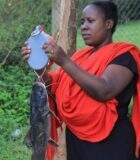
FRANK NANSEREKO
Research Assistant
National Fisheries Resources Research Institute (NaFIRRI)
Jinja, Uganda
Frank Nansereko is a fisheries researcher with expertise in aquatic ecology and fish stock assessment. She has worked with the National Fisheries Resources Research Institute (NaFIRRI), contributing to ecological monitoring, fishery surveys, and research coordination across Uganda’s major water bodies, including Lakes Victoria, Albert, Kyoga, Edward, and George, as well as the River Nile. Frank has built technical capacity by training local government fisheries staff and data collectors, mentoring university students, and supporting community sensitisation and conservation awareness programmes to strengthen local stewardship of aquatic resources. Her technical expertise includes fish diagnostics, molecular biology, ecological monitoring, and GIS-based mapping of critical fish breeding and nursery areas. In addition to her research role, she has engaged stakeholders through multi-level collaborations and served as a part-time lecturer at Busitema University. Frank holds an MSc in Health of Aquatic Animal Resources and is committed to sustainable fisheries management and aquatic biodiversity conservation.
ZAMBIA- LAKE ITEZHI – TEZHI / KABOMPO RIVER

IPAALO NDHLOVU
Research Assistant
University of Reading CO Palabana University
Mufulia, Zambia
Ipaalo Ndhlovu holds a BSc in Fisheries and Aquaculture from the Copperbelt University, Zambia, and works as a Research Assistant with the University of Reading. She has contributed to research on the ecological and economic impacts of invasive crayfish, climate change perceptions, vulnerability and adaptation strategies, and heavy metal contamination in the Kabompo River and Lake Itezhi-Tezhi and its effects on fish and human health. Ipaalo has also gained practical experience with the Ministry of Fisheries and Livestock, where she supported aquaculture development, engaged directly with farmers, and worked closely with women’s cooperatives to promote empowerment and sustainable practices. Her research interests include aquatic ecology, invasive species management, and sustainable aquaculture feeds, particularly the use of crayfish meal as a locally sourced protein alternative. She is passionate about aquatic conservation, food security, and gender equity, and aspires to advance research and community-focused initiatives that support healthy aquatic ecosystems across Zambia and beyond.
RWANDA – LAKE KIVU
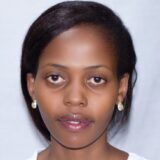
CLAUDINE NYAMPINGA
Environmental Flow (Transboundary) Specialist
Rwanda Water Resources Board
Kigali, Rwanda
Claudine Nyampinga is an Environmental Flow Management (Transboundary) Specialist at the Rwanda Water Resources Board, holding a Master’s degree in Water Management. She has extensive experience in hydrology, water resources planning, and environmental management, with a focus on developing environmental flow guidelines and ensuring compliance with national sustainability and climate resilience objectives. Claudine has strong expertise in environmental and social safeguards, contributing to the preparation and review of key safeguard documents that guide sustainable water infrastructure development while protecting communities and ecosystems. In transboundary water cooperation, she actively engages with initiatives such as the Nile Basin Initiative and the Lake Victoria Basin Commission. Beyond her technical expertise, Claudine is committed to mentoring young professionals—particularly women—and advancing policies that promote inclusive, sustainable, and climate-resilient water management.
KENYA – LAKE VICTORIA/MARA RIVER/AKAGERA RIVER
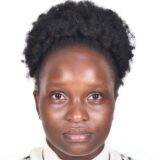
MELVIN KERUBU ONDIBA
Phd Candidate
Faculty of Sciences, Mohammed V University- Rabat, Morocco – Kenya Wetlands Biodiversity Research Network (KENWEB)
Rabat, Morocco
Melvin Ondiba is a molecular biologist and ecologist with strong expertise in molecular genetics, biodiversity monitoring, and conservation. She holds a Bachelor’s degree in Biotechnology and Biosafety from the University of Eldoret and a Master’s degree in Biodiversity, Valorisation, and Conservation from Mohammed V University, where she is currently pursuing her PhD. Her research focuses on biodiversity conservation and species interactions within African aquatic systems, applying advanced molecular approaches including DNA extraction, amplification, sequencing, and environmental DNA (eDNA) analysis. Through these methods, she investigates overall biodiversity patterns to better understand species geographical distributions, evolutionary relationships, and ecological interactions. Beyond her academic work, Melvin has a strong interest in nature-based activities and personal development, enjoying travel, nature exploration, and practicing karate.
DEMOCRATIC REPUBLIC OF CONGO
LAKE MALAWI/NIASA/NYASA – LIMPHASA RIVER

GISELE AHANA SHAMAMBA
Researcher
Unité d’Enseignement et de Recherche en Hydrobiologie Appliquée-ISP/Bukavu (UERHA-ISP/Bukavu)
Bukavu, Democratic Republic of Congo
Ahana Shamamba Gisèle is a researcher at UERHA-ISP/Bukavu, Democratic Republic of Congo, specialising in aquatic ecology, ecotoxicology, and limnology, with strong expertise in both field and laboratory research. She holds a BSc in Biology, where her undergraduate research examined the impacts of chemically treated brewery wastewater from Bralima-Bukavu on littoral zooplankton in Lake Kivu. With support from the CARN Aspire programme, she further investigated the effects of pharmaceutical effluents from Pharmakina-Bukavu on Lake Kivu’s littoral zooplankton and contributed to the Lake Kivu Monitoring Programme through biodiversity assessments and water quality monitoring in gas concession areas. Gisèle obtained her Master’s degree in Fisheries and Aquatic Sciences from Mzuzu University, Malawi, focusing on the impacts of pesticide and fertilizer use on water quality, sediments, and fish in the Limphasa River. In addition to her research, she has teaching experience that has strengthened her practical and analytical skills. Her work is driven by a commitment to advancing sustainable aquatic ecosystem management and promoting science-based conservation of water resources in Africa.
ETHIOPIA – GREATER AND LITTLE AKAKI RIVERS
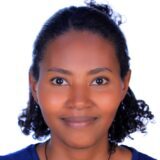
MAHDER MEKONNEN SHUMI
Lecturer and Researcher
Department of Zoological Sciences, Addis Ababa University, Ethiopia
Addis Ababa University
Phd Candidate
University of Natural Resources and Life Sciences (BOKU)
AUSTRIA
Mahder Shumi is a Lecturer and Researcher in Aquatic Ecotoxicology at the Department of Zoological Sciences, Addis Ababa University, Ethiopia, and is currently pursuing her PhD at the University of Natural Resources and Life Sciences, Austria. She has a strong academic background in aquatic ecosystems and environmental management, with research focusing on the characterization and quantification of nanoparticles in urban rivers in Ethiopia and the assessment of their ecotoxicological risks using advanced cytotoxicity assays on fish cell lines. Prior to her doctoral studies, Mahder gained significant experience as an aquatic ecologist, including the characterization and treatment of hospital wastewater through constructed wetland ecosystems. Combining academic rigor with hands-on field expertise, she contributes to aquatic ecotoxicology, water quality management, and emerging pollutants research. Mahder is passionate about promoting safe and sustainable aquatic ecosystems, particularly in the context of growing environmental pressures from nanotechnology.
KENYA – LAKE VICTORIA
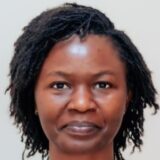
DORINE ACHIENG WERE
PhD student
Maseno University
Kisumu, Kenya
Dorine Achieng Were is an early-career researcher with a strong passion for freshwater ecosystem health, climate change, and sustainable livelihoods. She has served as a Research Intern at the Kenya Marine and Fisheries Research Institute (KMFRI), contributing to research on harmful algal blooms, fish biology, and pollution monitoring. Dorine is currently a researcher at Ecoloby Aquatics Consultancy Firm under the mentorship of Dr. Erick Ogello, where her work focuses on aquaculture innovations and sustainable fisheries. Her research bridges science and community needs through the development of affordable fish feeds, nutritional interventions such as dagaa utilization, and climate-resilient practices. She has conducted studies on cyanobacteria blooms, microcystin distribution in Lake Victoria’s Winam Gulf, and zooplankton taxonomy in both large and small inland waters. As a NEWF Fellow, Dorine is developing the Silent Shores documentary to highlight the challenges faced by women fish traders in sustaining their livelihoods. Beyond research, she is committed to science communication and storytelling as tools for social change and community empowerment.
2025 AWIS Sponsors


Becoming a Sponsor
The African Women in Science (AWIS) program is actively seeking partnerships. The success of AWIS relies on the support of donors who recognize what investing in the next generation of freshwater experts means for our global freshwater future. Together, we can answer the global call to enhance the participation of women in solving our most critical freshwater issues.
To support the AWIS program please contact Ted Lawrence, IISD-ACARE Executive Director, at ted@agl-acare.org